



Incepted in the year 2016 at Ahmedabad (Gujarat, India), we “Major Instruments” are a Partnership firm that is an affluent manufacturer of a wide array of Industrial Flow Meter and Level Instruments.
Accurate flow measurement is important for many industries where liquids need to be monitored, controlled, and processed efficiently. From water treatment plants to chemical industries, food processing units, pharmaceuticals, and manufacturing facilities, knowing the exact flow rate of liquid helps businesses improve productivity and maintain process quality. An Electromagnetic Flow Meter Manufacturer provides advanced flow measurement solutions designed to deliver reliable and accurate readings for different industrial applications.
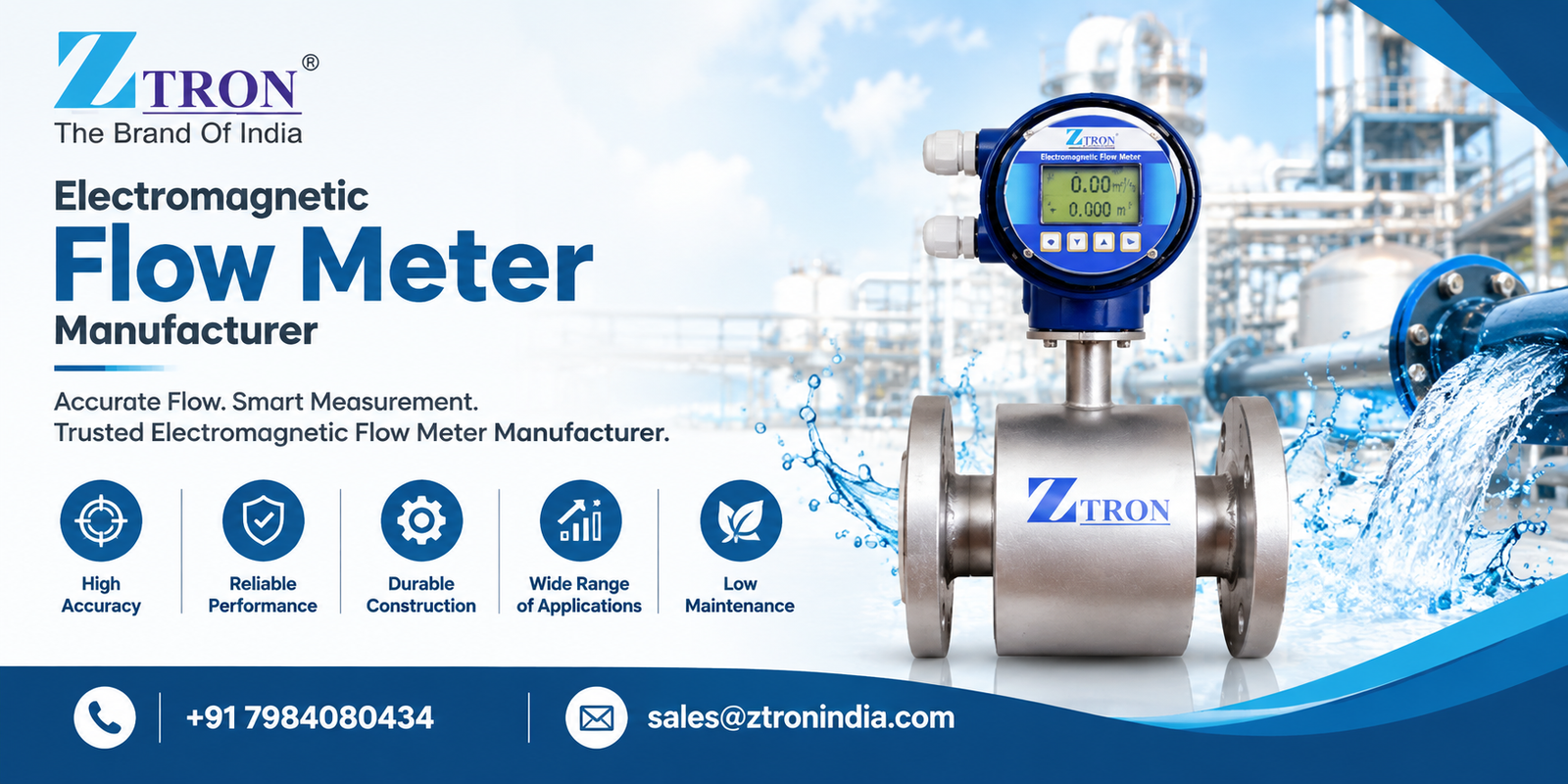
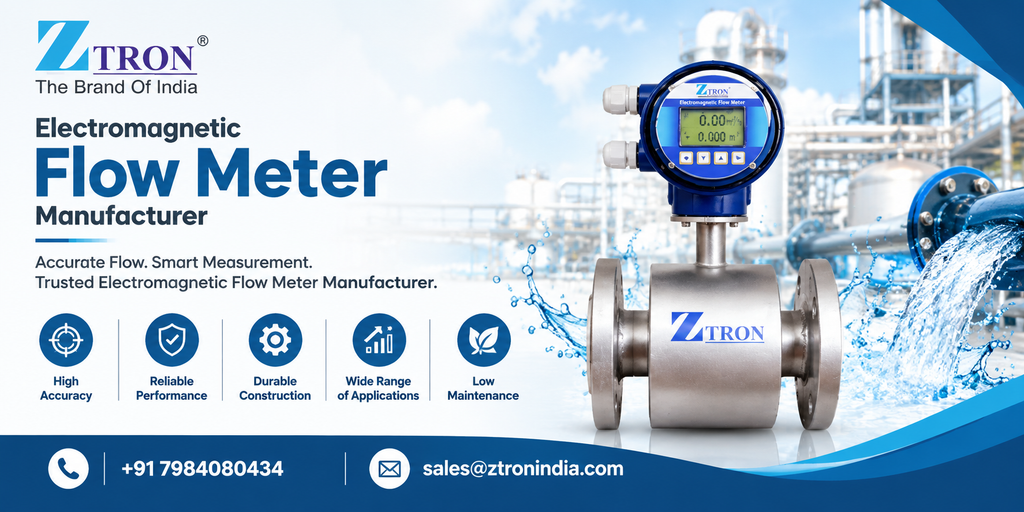
Electromagnetic flow meters, also known as mag flow meters, are widely used for measuring the flow of electrically conductive liquids. They work without moving mechanical parts, making them suitable for applications where reliability, low maintenance, and long service life are important.
Major Instruments is engaged in providing industrial instrumentation and flow measurement solutions for various applications. The company focuses on supplying reliable instruments that help industries monitor and manage their liquid flow requirements efficiently. We are the best Electromagnetic Flow Meter Supplier.
An electromagnetic flow meter is an industrial measuring instrument used to determine the flow rate of conductive liquids flowing through a pipeline. The working principle is based on Faraday’s law of electromagnetic induction. We are the best Electromagnetic Flow Meter Supplier in Gujarat.
When a conductive liquid passes through the magnetic field generated inside the flow meter, a voltage is produced. Electrodes installed inside the meter detect this voltage, and the instrument converts the signal into a flow-rate measurement.
Because electromagnetic flow meters do not contain rotating parts or mechanical obstructions in the flow path, they can provide consistent performance while reducing wear and maintenance requirements. A reliable Electromagnetic Flow Meter Manufacturer designs these instruments with suitable liners, electrodes, sensors, and electronic components according to the requirements of different industrial processes.
Inline electromagnetic flow meters are installed directly into the pipeline. They provide continuous and accurate flow measurement without creating significant pressure loss. These meters are suitable for industrial pipelines where permanent flow monitoring is required.
They are commonly used for measuring water, wastewater, chemicals, slurry, and other conductive liquids. Different pipe sizes and lining materials can be selected according to the application.
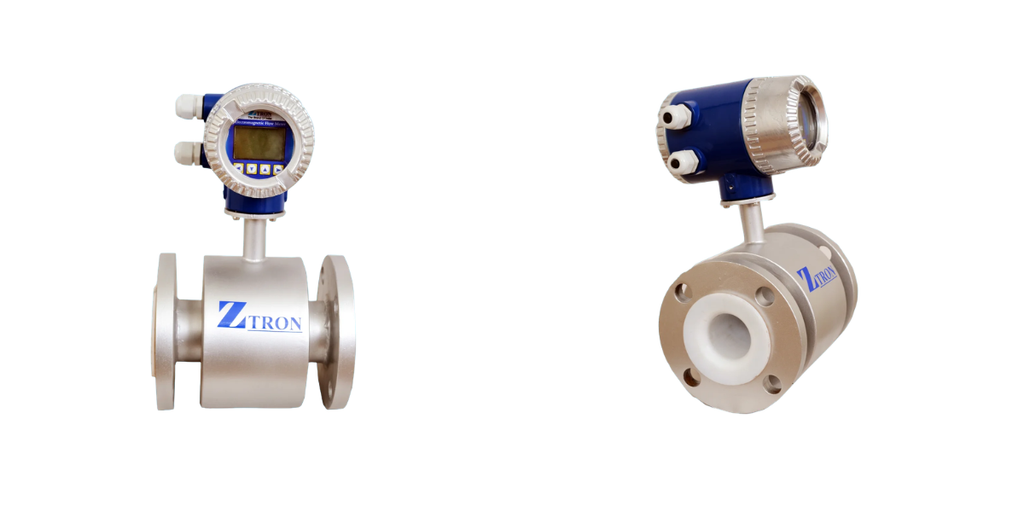
Flanged electromagnetic flow meters use flanged connections for installation. They are particularly suitable for large industrial pipelines and heavy-duty applications. The flanged design provides a strong and secure connection, making these meters suitable for demanding industrial environments.
They are commonly used in water supply systems, wastewater treatment plants, process industries, and irrigation systems.
Wafer-type electromagnetic flow meters are compact and lightweight. They are installed between two pipeline flanges, making them a practical option where installation space is limited.
Their compact construction can make installation easier while maintaining reliable flow measurement. They are frequently selected for industrial process lines, water applications, and general liquid-flow monitoring.
Battery-operated electromagnetic flow meters are useful in locations where electrical power is not readily available. They operate using an internal battery and can be suitable for remote flow measurement applications.
These meters can be used in water distribution, agricultural applications, temporary installations, and remote pipelines. Battery life depends on the meter configuration, operating conditions, and measurement requirements.
Remote-type electromagnetic flow meters have the sensing element and electronic converter installed separately. This arrangement is useful when the pipeline is located in a difficult-to-access area or where the electronics need to be positioned away from vibration, heat, moisture, or other environmental conditions.
Remote configurations are commonly used in wastewater treatment, chemical plants, water processing, and industrial production facilities.
Compact electromagnetic flow meters combine the sensor and electronic converter into a single unit. This design requires less installation space and provides a convenient solution for applications where the meter can be easily accessed.
They are suitable for smaller and medium-sized pipelines, water systems, process applications, and general industrial flow measurement.
One of the most common applications of electromagnetic flow meters is in water and wastewater treatment plants. They can measure the flow of raw water, treated water, sewage, sludge, and other conductive liquids. Accurate flow measurement helps operators monitor water consumption, control treatment processes, and manage wastewater discharge.
They are useful in municipal water systems as well as industrial wastewater plants where continuous flow monitoring is required.
Chemical plants handle different conductive liquids, including acids, alkalis, chemical solutions, and process fluids. Electromagnetic flow meters can be selected with suitable lining and electrode materials to handle demanding chemical applications.
They help measure the movement of liquids between tanks, reactors, pipelines, and processing units. Accurate flow measurement can support better process control and consistent production.
The pharmaceutical industry requires controlled and accurate processes. Electromagnetic flow meters can be used for measuring compatible conductive liquids in water systems, process lines, and manufacturing operations.
Depending on the application, hygienic designs and appropriate materials can be selected to support cleanliness and process requirements. Proper flow monitoring also helps manufacturers maintain consistency during production.
Food and beverage plants use flow meters to monitor water, liquid food products, cleaning solutions, and other conductive fluids. Electromagnetic flow meters can be useful where accurate measurement is required without introducing moving mechanical components into the flow path.
They can be installed in processing lines, utility systems, cleaning systems, and liquid transfer applications, provided the measured liquid has the required electrical conductivity.
Electromagnetic flow meters are also used for irrigation and agricultural water management. They can measure the flow of water through pipelines, helping users monitor water distribution and consumption.
In large irrigation systems, accurate flow information can assist with managing water supply across different fields and sections. This can make it easier to identify unusual flow conditions and improve overall water management.
Mining operations often transport water, slurry, and other conductive process liquids through pipelines. Electromagnetic flow meters can be suitable for these applications because they do not have moving parts that can easily become obstructed by suspended material.
Depending on the slurry characteristics, the meter’s lining and electrode configuration can be selected for the operating environment. Flow monitoring helps plants control material movement and maintain stable processing operations.
The pulp and paper industry uses various conductive liquids, including water, pulp mixtures, chemicals, and wastewater. Electromagnetic flow meters can measure these fluids in different stages of the manufacturing process.
They can help monitor process water, chemical dosing systems, pulp transfer, and wastewater streams. Reliable flow measurement supports production control and efficient use of resources.
Power plants use large quantities of water for cooling, processing, and other utility operations. Electromagnetic flow meters can be installed in suitable water and conductive-liquid pipelines to measure flow rates.
They may be used in cooling-water systems, water-treatment units, boiler-related processes, and other plant utility systems. Continuous flow monitoring helps operators understand system performance and manage water movement.
Large commercial and industrial facilities often use chilled-water and cooling-water systems. Electromagnetic flow meters can measure the movement of conductive water through cooling and circulation pipelines.
Flow information can help operators monitor circulation, identify abnormal flow conditions, and maintain the performance of cooling systems. They are commonly considered for applications where accurate measurement of water flow is required.
Although electromagnetic flow meters are not suitable for non-conductive hydrocarbons such as many types of crude oil and refined petroleum products, they can be used for conductive liquids in supporting oil and gas operations.
Examples can include produced water, wastewater, water injection systems, and certain chemical or treatment solutions. Correct meter selection is important because the electrical conductivity of the liquid determines whether electromagnetic measurement is appropriate.
Cement plants and construction-material facilities use water, slurry, and other conductive mixtures in their operations. Electromagnetic flow meters can be used to monitor suitable liquid and slurry flows.
Accurate measurement can support batching, material handling, water management, and process control. Heavy-duty configurations can be considered for industrial environments where equipment is exposed to dust, vibration, and continuous operation.
One of the main benefits of an electromagnetic flow meter is its ability to provide accurate flow measurement. Since the meter works without mechanical moving parts, it can deliver consistent readings with less mechanical wear. Accurate measurement helps industries monitor liquid consumption, production processes, and material movement more effectively.
Electromagnetic flow meters generally do not contain mechanical moving components inside the flow path. This reduces the chances of mechanical failure and minimizes maintenance requirements. A reliable Electromagnetic Flow Meter Manufacturer can design meters that provide long-term performance in demanding industrial environments.
These flow meters are suitable for many conductive liquids, including water, wastewater, chemicals, slurries, and various process liquids. The absence of moving parts also makes them useful for liquids containing suspended particles, provided the application falls within the meter’s operating requirements.
Because electromagnetic flow meters have no rotating or mechanical sensing components in the fluid path, they generally require less routine maintenance than many mechanical flow measurement technologies. This can help reduce maintenance work and operational interruptions.
A quality electromagnetic flow meter can provide stable performance over an extended service life when correctly selected, installed, and maintained. Manufacturers can offer appropriate lining and electrode materials according to the liquid being measured, helping the meter withstand different process conditions.
Electromagnetic flow meters are used across numerous industries. Common applications include water treatment, wastewater management, chemical processing, pharmaceuticals, food processing, paper manufacturing, mining, and general industrial processes. This versatility makes them a practical solution for many liquid-flow measurement requirements.
Accurate flow information allows operators to monitor and control industrial processes more effectively. Flow data can help identify unusual consumption, process variations, leakage, or changes in production conditions. This supports better operational control and resource management.
Electromagnetic flow meters can be suitable for certain slurry applications because there are no moving mechanical parts exposed to the flowing medium. This makes them useful in industries where liquids may contain suspended solids or abrasive particles, subject to proper material and application selection.
Depending on the model, electromagnetic flow meters are available in different sizes, connection arrangements, liner materials, electrode materials, and transmitter configurations. A professional Electromagnetic Flow Meter Manufacturer can help select a configuration that matches the existing pipeline and process requirements.
Although the initial purchase price depends on the model and specifications, electromagnetic flow meters can offer economical operation because of their low mechanical wear and maintenance needs. Reliable flow measurement can also help industries control water, chemicals, and other process liquids more efficiently.
Modern electromagnetic flow meters can be supplied with electronic transmitters and communication or output options depending on the model. These features can help connect flow measurement with industrial monitoring, automation, and control systems.
A professional Electromagnetic Flow Meter Manufacturer focuses on providing flow meters with reliable measurement performance. Electromagnetic flow meters work without moving mechanical parts, helping reduce mechanical wear and maintain consistent readings. Accurate flow measurement is important for process control, monitoring, production management, and resource management.
Different industries have different flow measurement requirements. A trusted manufacturer can offer electromagnetic flow meters suitable for applications involving water, wastewater, chemicals, slurries, and other conductive liquids. Customers can select the appropriate meter according to pipe size, flow range, liquid characteristics, pressure, temperature, and installation conditions.
Industrial flow meters must operate in demanding environments. A reliable manufacturer uses suitable materials and carefully designed components to create products that can withstand regular industrial operation. Quality construction can contribute to longer service life and dependable performance.
Pipeline systems are available in many different sizes and layouts. An experienced Electromagnetic Flow Meter Manufacturer can provide meters in different nominal diameters and configurations to suit various pipelines. Depending on the application, customers may also require different lining materials, electrode materials, connection types, displays, and output options.
One major advantage of electromagnetic flow meters is their simple measuring principle. Since the flow measurement does not depend on rotating or moving mechanical components, there is less mechanical wear during normal operation. This can make electromagnetic flow meters suitable for continuous industrial processes.
Electromagnetic flow meters are designed specifically for conductive liquids. They can be used in applications where conventional mechanical flow meters may not be ideal. A knowledgeable manufacturer can help customers determine whether the conductivity and characteristics of their process liquid are appropriate for electromagnetic measurement.
Every industrial process is different. A good manufacturer understands that one standard flow meter may not suit every application. Manufacturers can help select suitable specifications based on the customer’s pipeline, fluid, operating conditions, required accuracy, and communication requirements. Customised configurations can help improve compatibility with existing process systems.
Reliable flow measurement helps operators understand how much liquid is moving through a pipeline. Electromagnetic flow meters can provide useful flow information for process monitoring and control. This information can support better production management, water management, batching, dosing, and overall process supervision.
Because electromagnetic flow meters generally have no moving parts in the measurement section, routine mechanical maintenance can be reduced. Proper installation, periodic inspection, and maintaining suitable operating conditions are still important, but the absence of mechanical moving components can simplify maintenance compared with some traditional flow measurement technologies.
Selecting a flow meter is not only about purchasing equipment. Proper sizing, installation, configuration, and application selection can influence measurement performance. An experienced Electromagnetic Flow Meter Manufacturer can provide technical guidance to help customers choose an appropriate model and configuration for their process.
Industrial facilities often operate continuously and require dependable instruments. A professionally manufactured electromagnetic flow meter can be designed for stable operation under specified pressure, temperature, and environmental conditions. Choosing a manufacturer with strong quality-control practices can help businesses obtain instruments suitable for their intended application.
Before purchasing an electromagnetic flow meter, users should consider several important factors:
Correct selection helps ensure that the flow meter performs effectively under actual operating conditions.
Electromagnetic flow meters generally require limited routine maintenance because they do not use moving mechanical measuring components. However, regular inspection is still important.
Users should check the electrical connections, grounding, pipeline condition, sensor installation, and signal stability. The measuring tube should also be kept free from conditions that could affect measurement performance.
Periodic calibration or verification can be considered according to the application’s accuracy requirements and quality procedures. Following the manufacturer’s installation and operating instructions can also help maintain reliable performance.
The working principle of an electromagnetic flow meter is simple and effective. The flow meter creates a magnetic field across the pipe using electromagnetic coils. When conductive liquid flows through this magnetic field, an electrical voltage is produced. The generated voltage is proportional to the velocity of the liquid.
Electrodes placed on opposite sides of the measuring tube sense this voltage. The electronic transmitter processes the signal and calculates the flow rate. The measured information can then be displayed locally or transmitted to other control systems for monitoring and process automation.
This working principle allows electromagnetic flow meters to measure many conductive liquids without placing mechanical moving parts into the flow path.
An electromagnetic flow meter is a valuable instrument for measuring conductive liquid flow across a wide range of industrial applications. Its electromagnetic measurement principle, absence of moving parts, low pressure loss, and suitability for many conductive liquids make it an important choice for modern flow measurement systems. We are the best Electromagnetic Flow Meter Manufacturer in Ahmedabad.
Businesses looking for a dependable Electromagnetic Flow Meter Manufacturer can consider Major Instruments for their industrial flow measurement requirements. With a focus on quality products, application-based solutions, and reliable service, Major Instruments provides flow measurement solutions for industries such as water treatment, chemicals, pharmaceuticals, food processing, agriculture, and industrial utilities.
Choosing the right electromagnetic flow meter requires careful consideration of the liquid, pipeline, operating conditions, accuracy requirements, and installation environment. With the right product and proper installation, industries can achieve better flow monitoring, improved process control, and more efficient operation.