



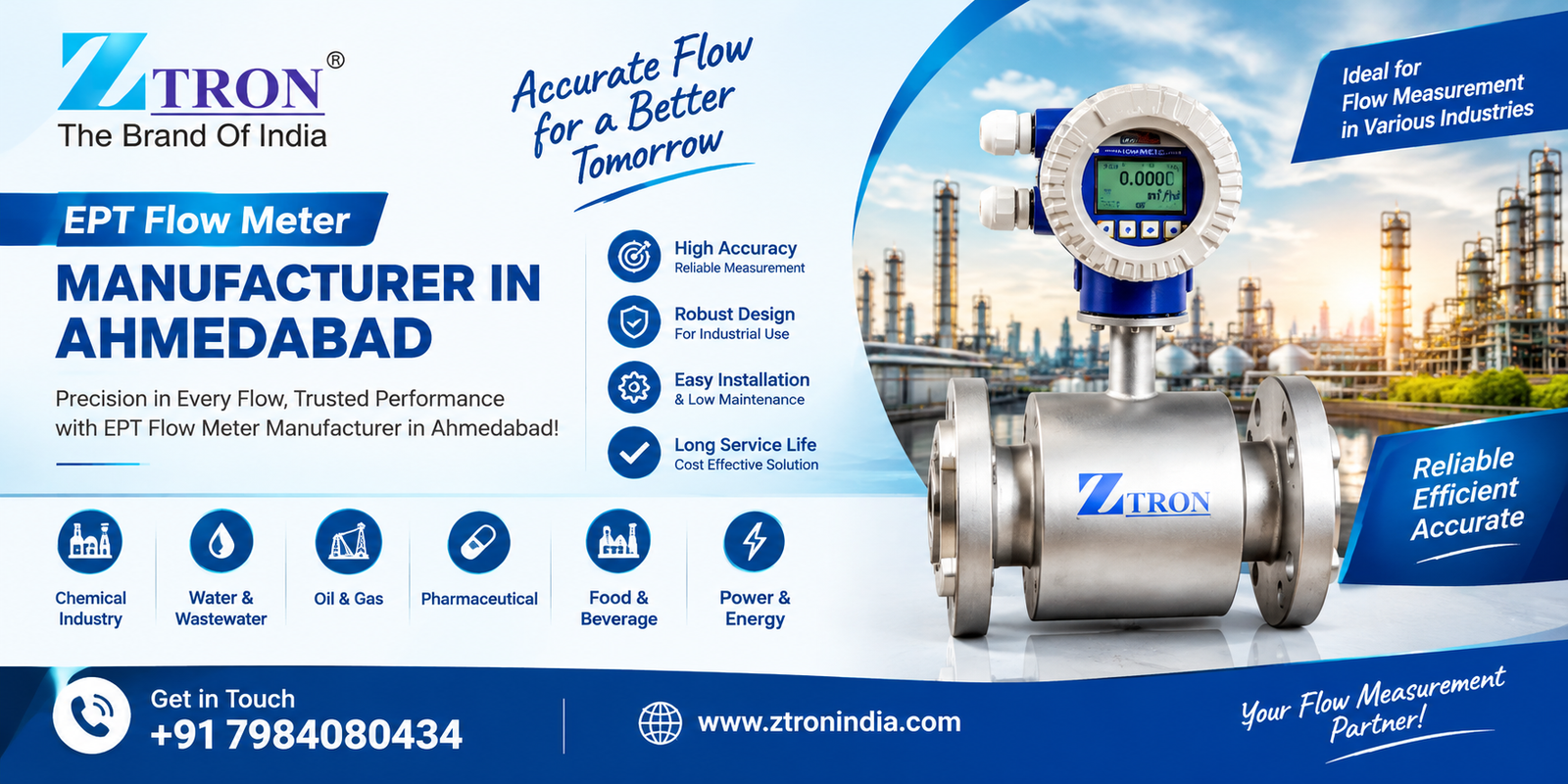
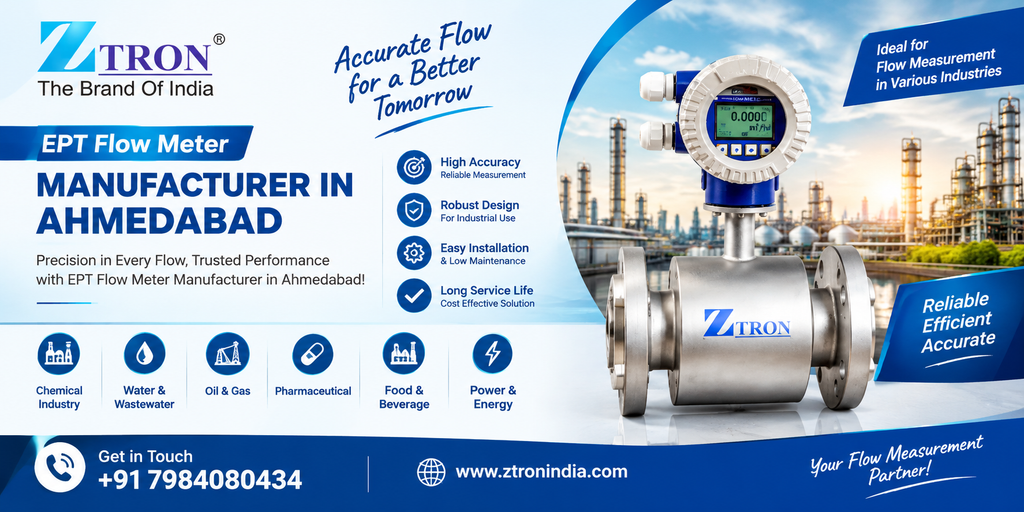
Accurate flow measurement is important for industries that handle liquids, chemicals, water, and other process fluids. Businesses need reliable instruments to monitor flow rates, control production processes, reduce wastage, and maintain consistent product quality. A suitable flow meter helps operators understand how much fluid moves through a pipeline and supports better control over industrial operations.
Companies searching for an EPT Flow Meter Manufacturer in Ahmedabad need products that meet their measurement requirements and operating conditions. Choosing the right flow meter depends on the type of fluid, flow range, pipe size, pressure, temperature, and required measurement accuracy.
Major Instruments is a company to consider when exploring industrial flow measurement solutions. By selecting the appropriate instrument for a particular application, businesses can improve process monitoring and support efficient plant operations.
The term EPT flow meter may refer to a particular product series or application-specific flow meter. Its exact meaning and technology should be confirmed with the manufacturer or supplier before purchase.
In general, an electronic flow meter measures the movement of liquid or gas through a pipeline and converts the measurement into a readable value. Depending on its design, the instrument may display flow rate, total flow, or both.
Some flow meters use electromagnetic principles, while others use turbines, differential pressure, ultrasonic signals, or other measurement technologies. Each type works differently and is suitable for particular operating conditions.
Businesses looking for an EPT Flow Meter Manufacturer in Ahmedabad should confirm the product’s working principle, supported fluid types, accuracy specifications, output signals, and installation requirements.
Ahmedabad is an important industrial centre in Gujarat, with manufacturing, pharmaceutical, chemical, textile, food processing, water treatment, and engineering businesses. Many of these industries depend on accurate flow measurement to manage production and monitor fluid movement.
Flow meters help operators measure process liquids, monitor consumption, and identify changes in flow conditions. Depending on the application, measurement data can also be used for automation, process control, and production reporting.
The main reasons industries use flow meters include:
For companies operating in Ahmedabad and surrounding industrial areas, selecting the correct flow meter can support better production management and operational efficiency.
Different flow measurement technologies serve different applications. Understanding these options helps buyers choose a suitable instrument.
Electromagnetic flow meters measure the flow of electrically conductive liquids using Faraday’s law of electromagnetic induction. They are commonly used for water, wastewater, and many conductive process liquids.
They have no moving parts in the measuring tube, which can reduce certain mechanical maintenance requirements. However, they are generally unsuitable for non-conductive liquids and most gases.
Turbine flow meters use a rotating turbine or rotor. The rotor’s movement is related to the fluid velocity and is converted into a flow measurement.
These meters can be suitable for compatible, relatively clean liquids and certain gases, depending on the design. Fluid cleanliness, viscosity, and flow conditions can affect performance.
Ultrasonic flow meters use sound waves to measure flow. Some designs are installed outside the pipe, making them useful where cutting into a pipeline is undesirable.
Their suitability depends on the measurement method, pipe material, fluid properties, and installation conditions.
Differential pressure flow meters measure the pressure difference created by a flow restriction, such as an orifice plate. The pressure difference is then used to calculate flow.
These meters are used in many industrial processes, but proper sizing and installation are important for reliable measurement.
Variable area flow meters, often called rotameters, measure flow using a float inside a tapered tube. They are commonly used for local indication in suitable liquid and gas applications.
They can be useful where a simple, easy-to-read flow indication is required.
When purchasing an EPT flow meter, buyers should first verify the specific model and its measurement technology rather than assuming that every flow meter operates in the same way.
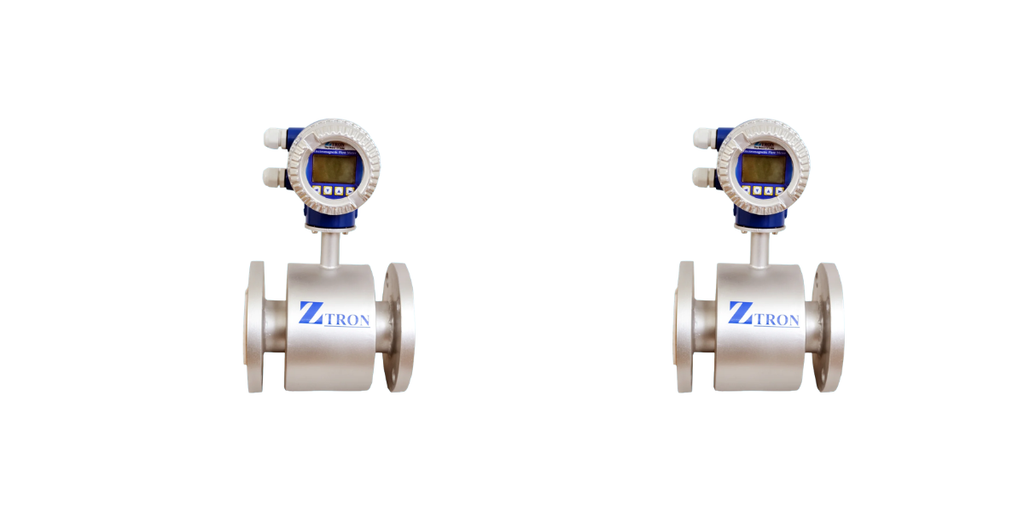
Depending on the actual product specifications, an EPT flow meter may be suitable for selected industrial flow measurement applications.
Flow meters help monitor water movement during treatment, filtration, distribution, and other processes. The chosen instrument must be compatible with the water quality and installation conditions.
Chemical plants use flow measurement to monitor process liquids and manage fluid transfer. Material compatibility is essential because some chemicals can damage unsuitable wetted components.
Pharmaceutical manufacturing requires carefully controlled processes. Flow instruments must meet the application’s accuracy, cleanliness, material compatibility, and documentation requirements.
Flow meters can measure ingredients, water, and other process fluids. Hygienic construction and appropriate food-contact requirements should be considered where applicable.
Textile processing often involves water, dyes, and other liquids. Suitable flow meters help operators monitor consumption and control selected production stages.
Industrial facilities use flow meters in cooling systems, fluid transfer lines, utility services, and other applications where flow monitoring is necessary.
A properly selected and installed flow meter provides useful flow information within its specified operating range. Accuracy depends on the instrument technology, fluid conditions, calibration, and installation.
Flow measurements help operators maintain the required process conditions. This can support more consistent production and better monitoring.
Monitoring flow can help identify abnormal consumption, unexpected changes, or potential leakage. It can also help businesses understand where resources are being used.
Depending on the model, a flow meter may provide pulse, analogue, or digital outputs for connection to compatible controllers and monitoring systems.
A suitable display or monitoring arrangement helps operators observe flow rates and accumulated quantities during routine operation.
Flow data can help maintenance teams identify changes in operating conditions and investigate possible process or equipment problems.
Selecting a suitable manufacturer or supplier requires more than comparing prices. Buyers should evaluate the instrument according to the actual application.
Sharing these details with the supplier helps narrow down the available options and reduces the risk of choosing an unsuitable instrument.
Choosing the right flow measurement partner helps businesses find instruments that match their process requirements. An unsuitable meter may provide unreliable readings or fail to perform properly under actual operating conditions.
Major Instruments can be considered when evaluating industrial flow measurement requirements. Businesses searching for an EPT Flow Meter Manufacturer in Ahmedabad should discuss their application, fluid properties, flow range, and required outputs with the company.
Reasons to consider Major Instruments include:
Contact Major Instruments directly to confirm the availability of EPT flow meters, the exact model specifications, pricing, calibration options, and after-sales support.
EPT flow meter may refer to a particular product series or application-specific instrument. Buyers should confirm the exact model and its measurement technology with the manufacturer or supplier.
A flow meter measures the rate or quantity of fluid moving through a pipeline. It helps businesses monitor consumption and control industrial processes.
Flow meters are used in water treatment, chemicals, pharmaceuticals, textiles, food processing, engineering, and general manufacturing.
Consider the fluid type, flow range, pipe size, pressure, temperature, accuracy requirements, output signals, and installation conditions.
Many modern flow meters provide analogue, pulse, or digital outputs. Compatibility depends on the specific model and the receiving control system.
Calibration helps verify measurement performance against a reference standard. The required calibration frequency depends on the application, instrument, and quality requirements.
Provide the fluid type, minimum and maximum flow rates, pipe size, operating pressure and temperature, required accuracy, output requirements, and installation details.
Major Instruments can be approached to discuss industrial flow measurement needs. Contact the company to confirm EPT flow meter availability, specifications, calibration documentation, and service options.
Flow meters play an important role in modern industrial operations by helping businesses monitor fluid movement, improve process control, and manage resources. Selecting the correct instrument requires careful consideration of fluid properties, flow range, operating conditions, accuracy, and installation requirements.
For businesses looking for an EPT Flow Meter Manufacturer in Ahmedabad, verifying the exact product technology and technical specifications is an essential first step.
Major Instruments is worth considering when exploring industrial flow measurement solutions. By selecting a meter that matches the application and following the recommended installation and calibration procedures, businesses can improve monitoring and support more efficient industrial operations.